
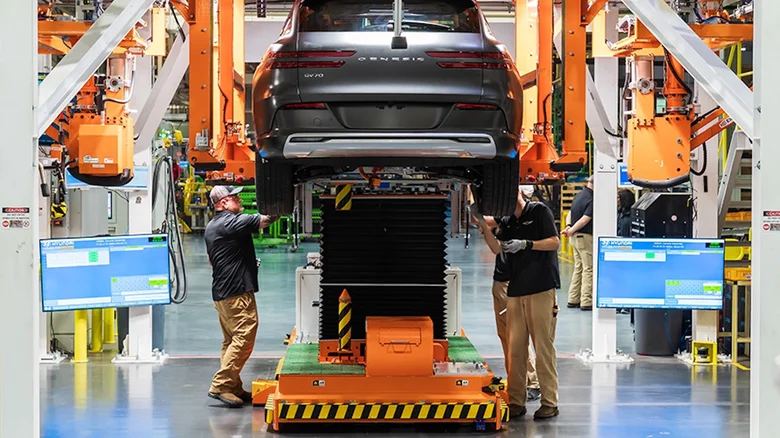
Genesis serves as Hyundai’s counterpart to Toyota’s Lexus, following a similar luxury-brand formula several years later. The marque has gained considerable popularity over the past decade, especially in the U.S. In 2025, American sales represented 37 percent of Genesis’ total production, helping the brand surpass Nissan’s established Infiniti luxury division in the U.S. sales race. Some of those Genesis vehicles were assembled in America.
Genesis officially became a standalone brand in 2015, with the goal of challenging BMW, Mercedes, and Lexus. Hyundai had already used the Genesis name for a coupe and two sedan models. One of those sedans developed into the Genesis G80, while the Genesis coupe was discontinued.
For its first eight years, every Genesis model, including the G70 and GV80, was built in South Korea. Hyundai’s enormous Ulsan complex produced its first vehicle in 1968, years before Hyundai entered the U.S. market and well before Genesis existed. That first vehicle was not a Hyundai design, but a Ford Cortina MKII manufactured under license.
The Ulsan complex has since evolved considerably. Its 1,200-acre site now includes several plants with a combined annual capacity of up to 1.4 million vehicles—equivalent to one car every 10 seconds. Plant 2 builds the Genesis GV60, GV70, and GV80 SUVs alongside the Hyundai Santa Fe and Palisade. The G70, G80, and G90 sedans are assembled at Plant 5, which also produces the Hyundai Tucson and Palisade. Hyundai announced a separate EV assembly line in 2023, and it began building the GV90 and GV90 Neolun SUVs in fall 2026.
By 2023, the U.S. had become too important to Genesis’ growth to overlook. American sales climbed from 6,948 units in 2016 to 82,000 in 2025. Hyundai responded by creating a Genesis production line at Hyundai Motor Manufacturing Alabama, or HMMA. Since the plant already builds models such as the Hyundai Tucson, Santa Fe, and Santa Cruz, expanding its operations to include Genesis was more practical than constructing a new facility.
The Electrified GV70 became the first Genesis model built in the United States—and the first produced outside South Korea—in February 2023. Assembly of the gasoline-powered GV70 followed several months later, but the arrangement did not last long. In August 2025, a Genesis spokesperson told CarScoops that the company had “temporarily paused assembly of the Electrified GV70 at Hyundai Motor Manufacturing Alabama (HMMA) as we optimize our production plans.”
Earlier that same month, Genesis had confirmed that the Korean-built Electrified G80 would be removed from its U.S. lineup because of weak EV sales. One year later, the company announced that it would stop building any cars in America and consolidate Genesis production in South Korea, while leaving open the possibility of returning to U.S. assembly. The change took effect in fall 2026 and gives HMMA more capacity for high-demand models such as the Hyundai Tucson and Santa Fe.
The production shift does not change the availability of Genesis vehicles in the U.S. It means that every Genesis model sold there will be built in South Korea.
Genesis began as Hyundai’s luxury challenger to BMW, Mercedes, and Lexus, with every model initially built in South Korea. Production expanded to Alabama in 2023 for the Electrified GV70 and gasoline GV70, but that U.S. operation was later discontinued. Beginning in fall 2026, Genesis production is consolidated in South Korea, while American customers continue to have access to the brand’s vehicles.

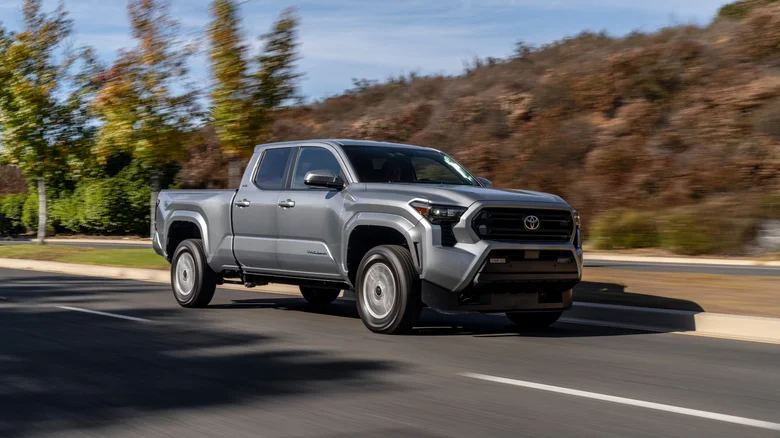
Toyota’s midsize pickup gains equipment for 2027, but its starting price rises while complimentary maintenance coverage is cut substantially.
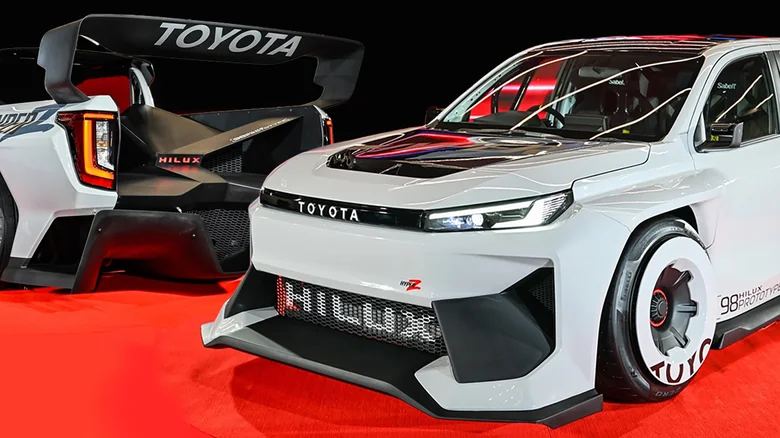
The one-off concept previews a dramatic low-slung pickup, while the production Hilux Travo Z Edition is already available to Thai buyers.
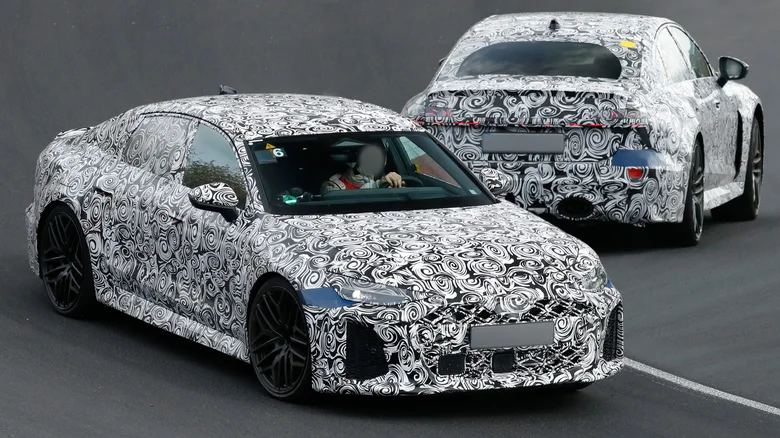
A camouflaged prototype of Audi’s next RS6 has been testing at the Nürburgring, revealing a sedan body, muscular fenders, oval exhaust outlets and an electrified powertrain.
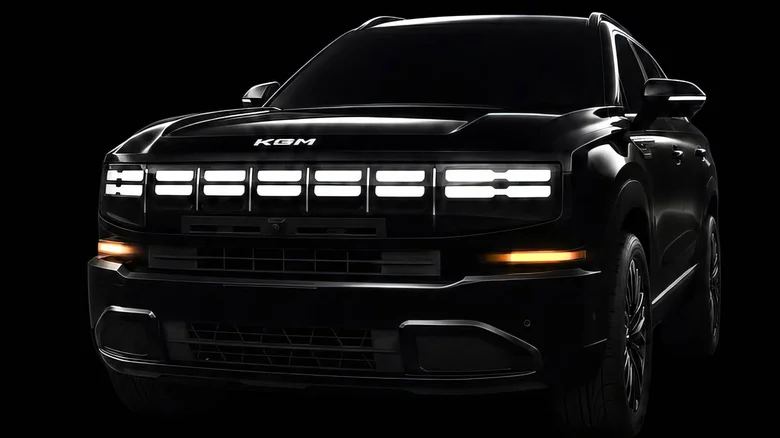
The 2027 flagship SUV will abandon its traditional ladder frame in favor of Chinese-sourced unibody underpinnings.
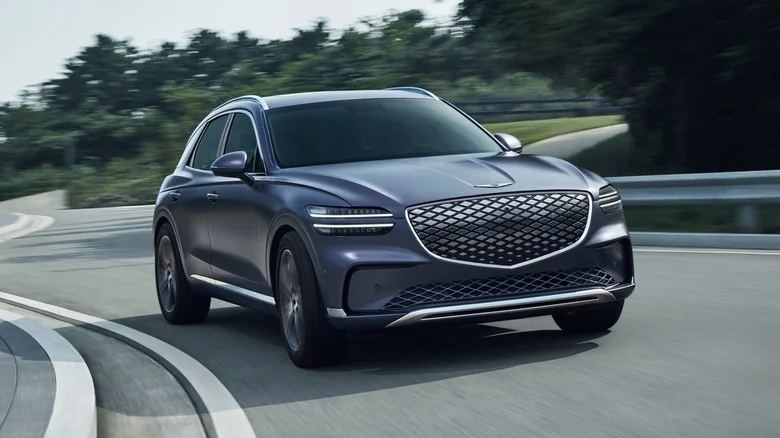
With demand for pure EVs cooling, Genesis is developing gas-assisted extended-range electric SUVs designed to ease concerns about charging access and driving range.