
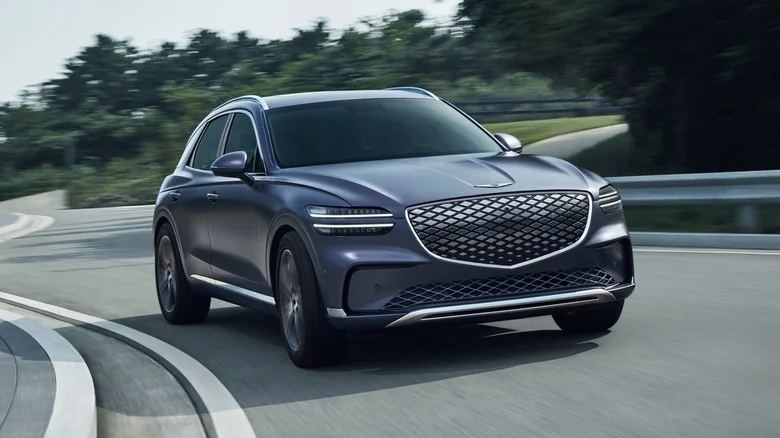
Charging access and driving range remain two major obstacles for electric-vehicle adoption among U.S. buyers. Genesis aims to address both with a new extended-range EV (EREV), which could reach the market before Scout Motors. Hyundai’s latest product roadmap schedules the Genesis SUV for the first half of 2027, and the automaker shared initial details during a roundtable at the LA Auto Show attended by CarScoops.
Genesis has not yet disclosed the SUV’s name, design, or pricing, but it has set a clear target: 640 miles of total driving range. While a firm U.S. delivery date is still unavailable, Genesis product-planning chief Ash Corson provided several details about the EREV, which could arrive well before Scout’s first vehicle reaches the road.
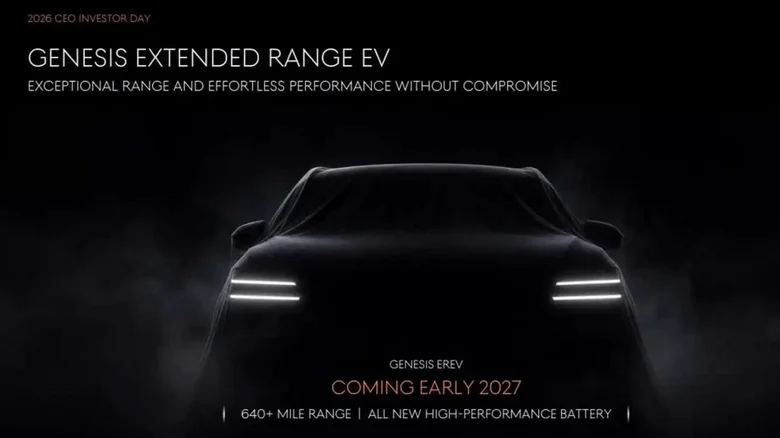
Genesis and Hyundai are both preparing EREV launches for early 2027. Hyundai’s version will be based on the Santa Fe and tied to the company’s plant expansion in Alabama. Genesis has not identified its model, although the teaser image appears to show a GV70. The brand previously said it was considering a GV90 EREV, but that model is expected to debut next year exclusively as an EV. Genesis has also described its upcoming EREV as a D-segment SUV, meaning it could be positioned as either a GV70 or GV80.
Hyundai has said its EREV architecture will use less than half the battery capacity of a comparable EV while targeting more than 640 miles of total range. The automaker attributes that goal partly to newly developed in-house battery cells, which should provide enough output to deliver performance comparable to a conventional battery-electric vehicle.
Corson says the EREV format could appeal to customers who want an EV but lack home charging access or the short daily commutes that make a traditional battery-electric vehicle especially convenient. “Some people have a garage, and it's great because they can charge an EV there. It's a wonderful experience,” he said. “A lot of people don't. Some people live in more rural areas where you have longer distances between refueling, whether that's charging or gas. So, I think providing the customer a choice of what powertrain makes sense for them is really key.”
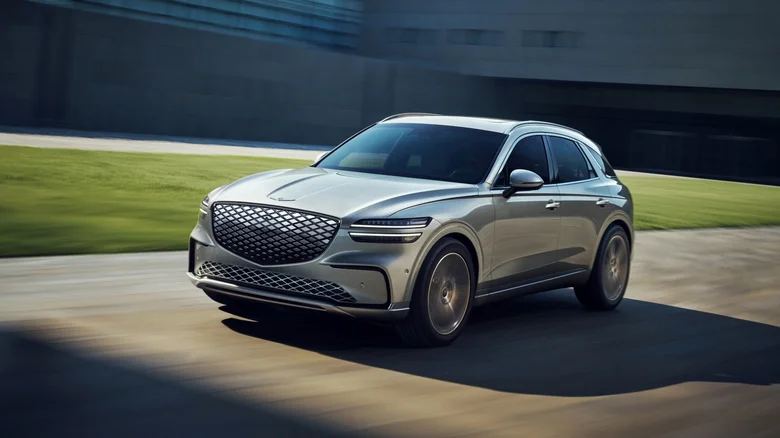
The EREV concept is relatively simple: it remains an EV that can be charged at home or through a public station, but it also carries a gasoline engine. That engine starts when needed to generate electricity and extend range. It does not mechanically drive the wheels, functioning instead as an onboard generator.
That setup reduces concerns about finding a charging station or waiting for a recharge. Drivers with convenient charging access can operate entirely in EV mode without using gasoline, while those without it can refuel and let the engine replenish the battery as they drive. Either way, long trips become easier because a quick stop for gasoline can keep the vehicle moving.
Genesis plans to introduce an extended-range electric SUV in the first half of 2027, potentially ahead of Scout Motors. The unnamed model could be a GV70 or GV80-sized vehicle and is targeting more than 640 miles of total range with a battery smaller than that of a comparable EV. Its gasoline engine will act solely as an onboard generator, supporting drivers without convenient charging access while preserving electric driving capability.

Toyota’s midsize pickup gains equipment for 2027, but its starting price rises while complimentary maintenance coverage is cut substantially.
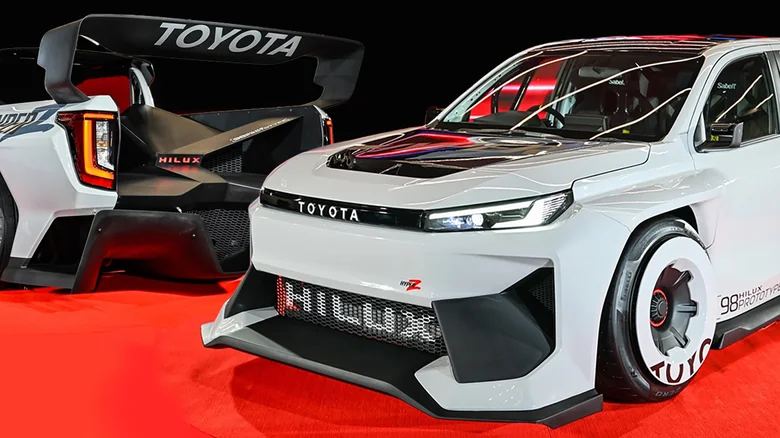
The one-off concept previews a dramatic low-slung pickup, while the production Hilux Travo Z Edition is already available to Thai buyers.
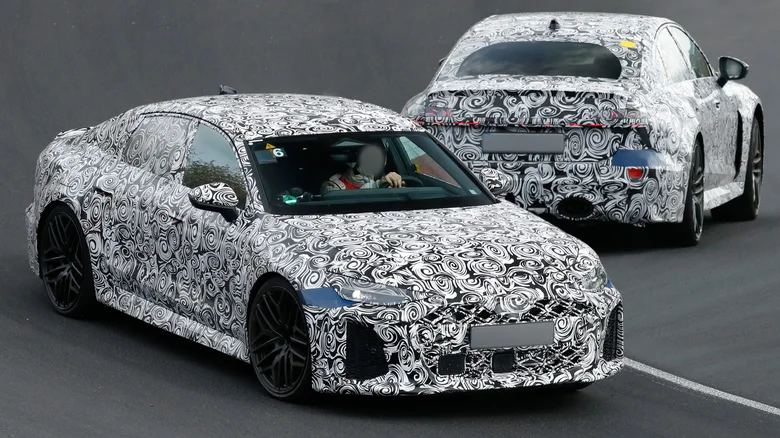
A camouflaged prototype of Audi’s next RS6 has been testing at the Nürburgring, revealing a sedan body, muscular fenders, oval exhaust outlets and an electrified powertrain.
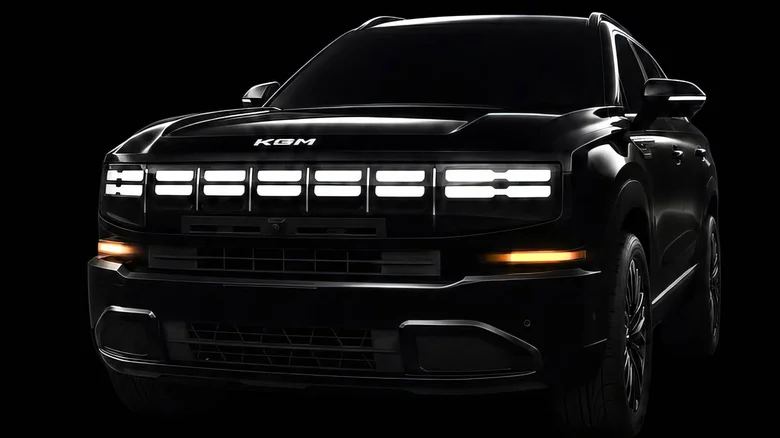
The 2027 flagship SUV will abandon its traditional ladder frame in favor of Chinese-sourced unibody underpinnings.
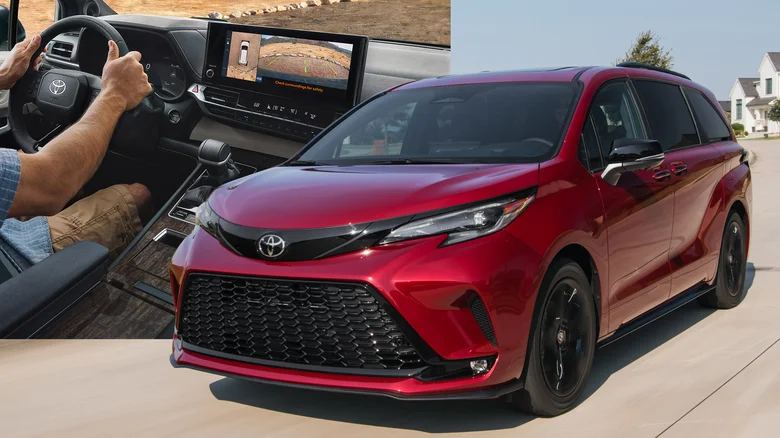
Toyota’s all-hybrid Sienna remains America’s mileage leader among self-charging hybrid minivans, and its 2027 update improves efficiency even further.