
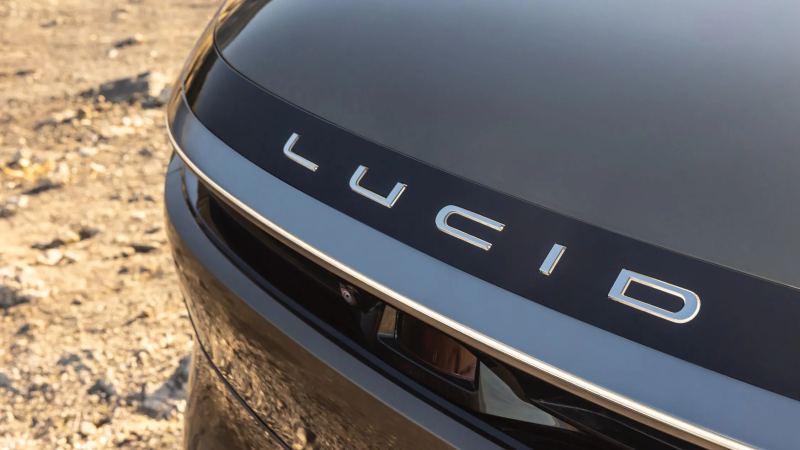
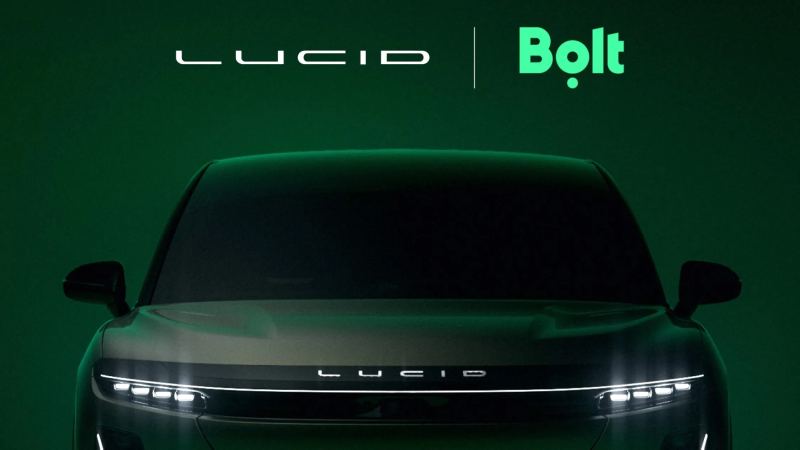
Bolt may be less familiar to American consumers, but the ride-hailing company operates in more than 850 cities across 50 countries. Now, in a move that echoes rival Uber’s autonomous-vehicle plans, the European platform is partnering with Lucid on a large robotaxi fleet. Lucid and Bolt have announced plans to place 25,000 autonomous cabs on European roads. The program supports Bolt’s goal of giving riders access to 100,000 driverless vehicles on its platform by 2035. Lucid already has an agreement with Uber to deploy 35,000 robotaxis across North America beginning this year.
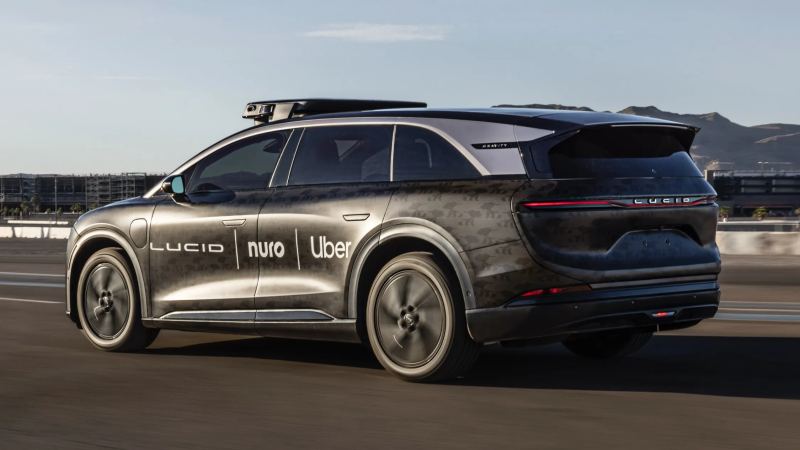
The two partnerships will use different vehicle platforms. Bolt’s Lucid robotaxis will be built around the automaker’s upcoming midsize architecture, which could be better suited to Europe’s typically narrower roads. In the US, Lucid and Uber will deploy the Gravity SUV, along with the midsize model once it becomes available.
The technology partners also differ. Robotaxis for both services will use Level 4 autonomous systems, allowing them to operate without a human driver. The US vehicles will rely on Nuro hardware and software, while Bolt’s fleet will use Nvidia Hyperion. Bolt says it will own all 25,000 vehicles.
Competition Intensifies
Europe’s robotaxi sector is becoming increasingly competitive. Uber, Verne, which was co-founded by Mate Rimac, and Pony.ai have already begun offering rides in Zagreb, Croatia. Waymo is testing in Europe and intends to launch in Germany before the end of 2027.
Uber has also partnered with Wayve to deploy 15 autonomous Mustang Mach-E robotaxis in London. For now, each vehicle must still carry a human driver while Wayve awaits final regulatory approval. Elon Musk has likewise promised to bring Tesla’s Cybercab to Europe, although no timeline has been announced.


The Toyota RAV4 remains a popular compact SUV, but its value and capabilities face strong competition from five hybrid alternatives.

Volkswagen has owned Bentley since 1998, but the luxury marque remains closely tied to its historic Crewe factory, where its current models are assembled in England despite their extensive German engineering and component links.

Tesla’s latest Roadster remains unconfirmed for production, but its dramatic debut included airborne stunts that few cars could match.

A fire at Frank Kent Cadillac in Fort Worth, Texas, destroyed six electric SUVs believed to be Cadillac Escalade IQs and took nearly 18 hours to bring under control.

A Ferrari F50 with just 106 miles on its odometer is expected to surpass $20 million at auction on October 31, potentially setting a new record for the model and highlighting its rapid rise in collector value.