
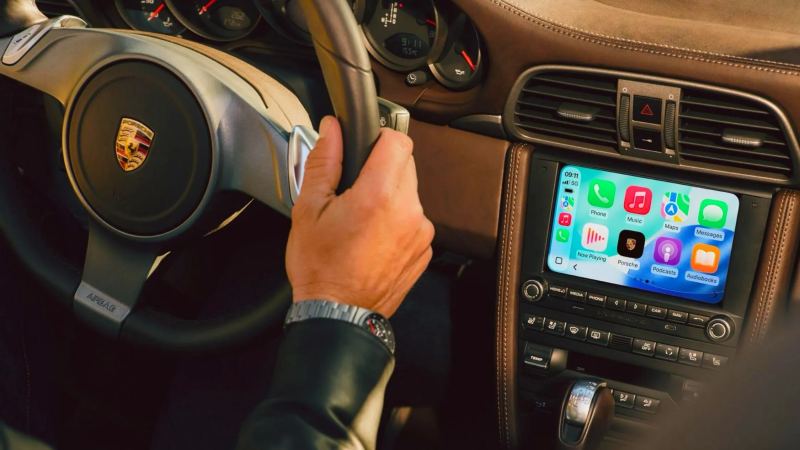
A car’s age is often revealed less by its power, performance or handling than by its infotainment and connectivity. Even expensive cars that were considered cutting-edge 10 or 15 years ago can feel dated when their period media and navigation systems are used. Porsche now offers a way to give owners of older models many modern conveniences while keeping the installation looking factory-fitted.
Porsche’s Classic Communication Management Plus, or PCCM Plus, systems have been available since 2020. More than 300,000 units have since been sold to owners of 996-generation 911s and first-generation 986 and 987.1 Boxsters and Caymans. A single-DIN PCCM kit also covers older air-cooled 911s. The latest expansion targets the next generation of neo-classic Porsche models built between 2009 and 2016.
The two new PCCM Plus infotainment units are designed for the consoles of the 981.2, 981, 997.2 and 991.1. In practical terms, that means compatibility with 2009-12 and 2013-16 Boxster and Cayman models, as well as 2009-13 and 2012-16 911s.
Most, though not all, of these cars were equipped with factory touchscreen media systems, and the new units are designed to fit cleanly into the original dashboard opening. Each features a 7-inch touchscreen, while compatible cars can also use the factory steering-wheel controls. Navigation directions and music information can appear in the instrument cluster, alongside modern features such as Apple CarPlay, Android Auto, Bluetooth phone connectivity and Wi-Fi. Displayed speed limits are intended to help drivers avoid getting carried away, while Boxster and Cayman models receive visual parking assistance in addition to audio guidance.
YouTube is available, but only when the car is stationary
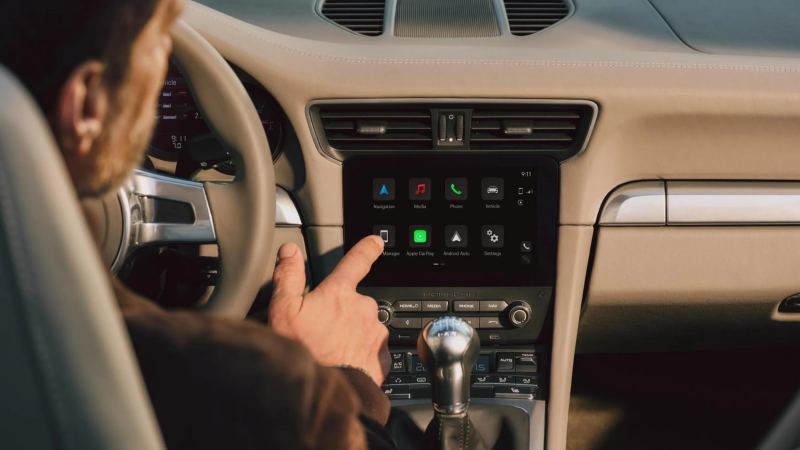
European-market systems include DAB radio, while U.S. versions receive HD radio. All units also feature FM and AM tuners, along with Bluetooth audio streaming. Where permitted by local regulations, owners can watch YouTube videos while stationary and change the virtual car displayed on the screen to match the exterior color of their vehicle. Navigation can use satellite imagery, and the Scenic Roads function can prioritize more entertaining routes over the fastest option. A nano SIM provides 4G data access, while map updates are delivered over the air, eliminating the need to visit a Porsche dealer or connect a laptop for regular revisions.
Porsche has not announced pricing for the two new systems. However, owners who follow the automaker’s recommendation to have an official service center perform the installation may find the total cost approaches $3,000. More details are expected when the units arrive at U.S. Porsche dealers early next year.
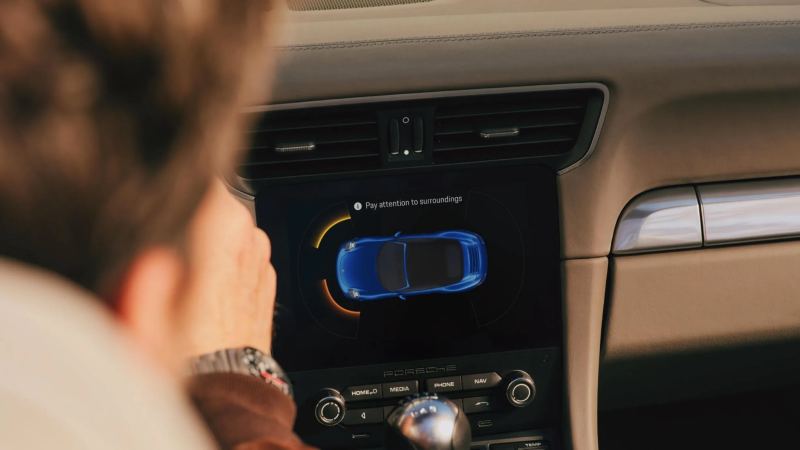
Porsche’s latest PCCM Plus systems modernize the infotainment in select 2009-16 Boxster, Cayman and 911 models with 7-inch screens, smartphone integration, navigation, Bluetooth and connectivity features. The units are designed to preserve the factory dashboard appearance, while additional features include over-the-air map updates and model-specific parking assistance. Pricing has not been announced, but U.S. availability is expected early next year.


The Toyota RAV4 remains a popular compact SUV, but its value and capabilities face strong competition from five hybrid alternatives.

Volkswagen has owned Bentley since 1998, but the luxury marque remains closely tied to its historic Crewe factory, where its current models are assembled in England despite their extensive German engineering and component links.

Tesla’s latest Roadster remains unconfirmed for production, but its dramatic debut included airborne stunts that few cars could match.

A fire at Frank Kent Cadillac in Fort Worth, Texas, destroyed six electric SUVs believed to be Cadillac Escalade IQs and took nearly 18 hours to bring under control.

A Ferrari F50 with just 106 miles on its odometer is expected to surpass $20 million at auction on October 31, potentially setting a new record for the model and highlighting its rapid rise in collector value.