
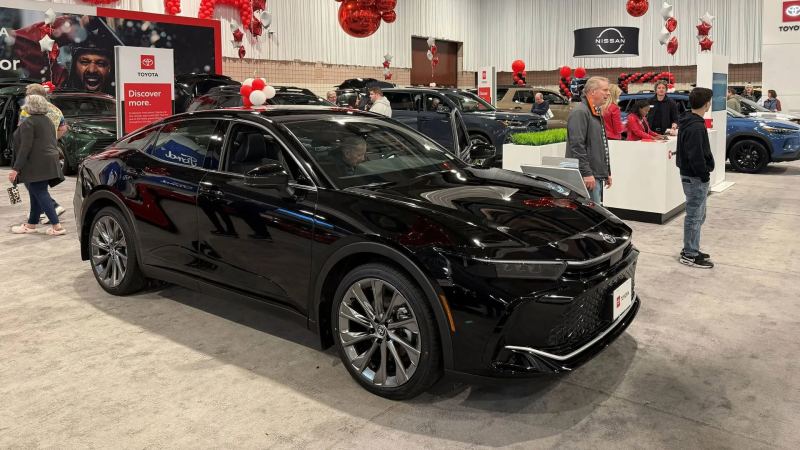
Auto shows have faced falling attendance and less participation from automakers. Those challenges contributed to the demise of the Geneva Motor Show, while the Detroit Auto Show has been reduced to a fraction of its former stature.
The Rochester International Auto Show is the latest event to become a casualty, with organizers announcing that it is being “discontinued.” Since launching in 1908, the show had drawn New Yorkers willing to face the winter snow to see the newest vehicles.
In a short statement, organizers offered their “sincere gratitude” to exhibitors, sponsors, and community partners. “Your support and enthusiasm contributed to the show’s success in the past, and we are thankful for the many years of collaboration and shared experiences,” they said. They also directed consumers to nearby dealerships for their new-vehicle needs.
The cancellation statement did not explain the reasoning, but organizers told News 10 that the show was no longer “economically viable.” Attendance declined after the COVID-19 pandemic and failed to return to earlier levels, with visitor totals in each of the past four years remaining below pre-pandemic figures.
Organizers described ending the show as a “very difficult” decision, but said they had to account for changing market conditions and the cost of producing the event. They noted that “consumers have a lot of options to get their information about their next car purchase,” while staging an auto show is “very expensive.”
Despite efforts to attract more visitors, attendance remained weak, and the Rochester Automobile Dealers Association felt “there was no indication that was going to change.” The organization ultimately chose to bring the event to an end.
The group emphasized that the “factors driving this decision are specific to the Rochester Auto Show” and “do not reflect auto shows in general,” adding that “many remain very viable.” The New York and Los Angeles Auto Shows appear relatively healthy, but several others continue to struggle for numerous reasons, including the internet’s impact on how consumers learn about vehicles.
The Rochester International Auto Show, which began in 1908, will not return after attendance failed to recover from the COVID-19 pandemic. Organizers cited changing market conditions, the high cost of staging the event, and easier ways for consumers to research vehicles. Although they said the decision was specific to Rochester, it adds to broader concerns about the future of traditional auto shows.


The Toyota RAV4 remains a popular compact SUV, but its value and capabilities face strong competition from five hybrid alternatives.

Volkswagen has owned Bentley since 1998, but the luxury marque remains closely tied to its historic Crewe factory, where its current models are assembled in England despite their extensive German engineering and component links.

Tesla’s latest Roadster remains unconfirmed for production, but its dramatic debut included airborne stunts that few cars could match.

A fire at Frank Kent Cadillac in Fort Worth, Texas, destroyed six electric SUVs believed to be Cadillac Escalade IQs and took nearly 18 hours to bring under control.

A Ferrari F50 with just 106 miles on its odometer is expected to surpass $20 million at auction on October 31, potentially setting a new record for the model and highlighting its rapid rise in collector value.