
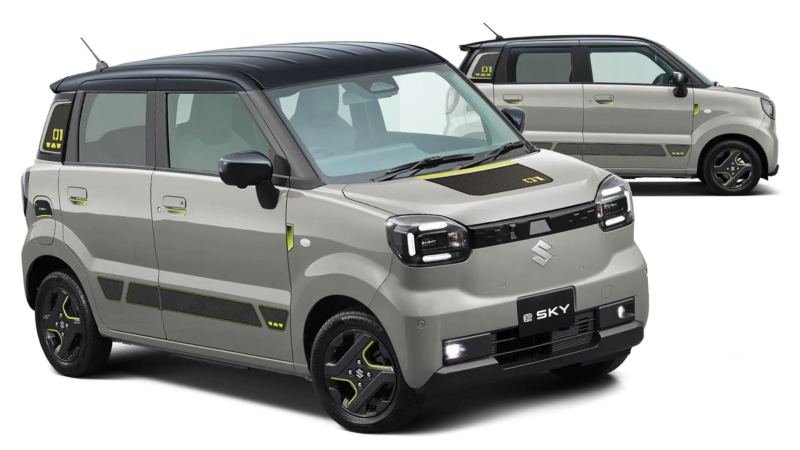
Suzuki has unveiled its first fully electric passenger kei car in Japan ahead of its planned launch in Europe and the UK. The new eSky delivers a notable range for its battery size, helped by a lightweight construction and efficient e-Axle. Japanese EV subsidies can reduce the tiny hatchback’s starting price to ¥1,552,000 ($9,800).
First shown in August 2026 as a development of the 2025 Vision e-Sky concept, the production eSky keeps the concept’s five-door layout and compact dimensions. Its lighting, bumpers, wheels, door handles and mirror caps have all been revised for production.
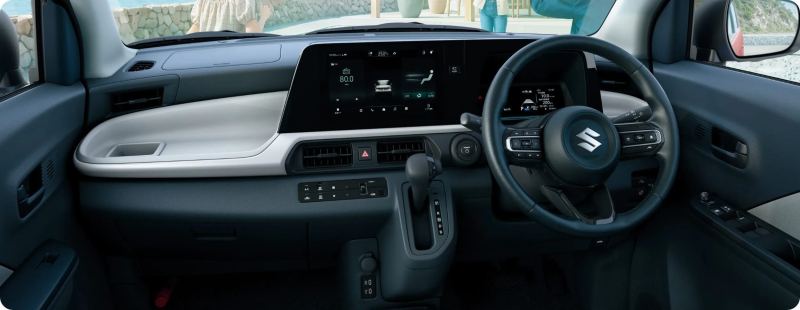
The four-seat interior prioritizes practicality with multiple storage areas and a dashboard tray. Equipment includes a digital instrument cluster, a 10.1-inch infotainment display on the flagship trim, and a separate control panel for the climate system.
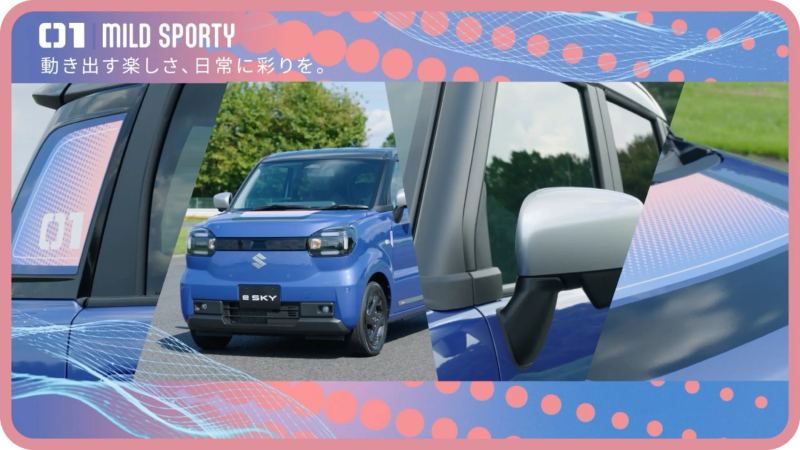
Suzuki offers several accessories for buyers looking to customize the EV. The range includes two colorful styling packages, a fully polyester recyclable floor mat and various charging accessories.
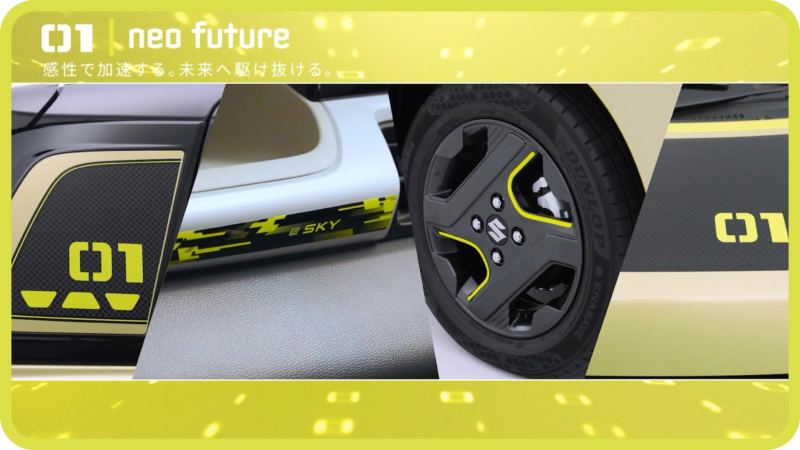
The Mild Sporty package combines pink, blue and gray exterior decals with white mirror caps, while the Neo Future package uses yellow and black detailing. Both packages include matching dashboard stickers and LED fog lights. A quarter garnish is available in eight colors for a more restrained look, and Suzuki also offers three playful tailgate decals.
The eSky is based on Suzuki’s Heartect e platform and uses the company’s new e-Axle, which integrates the electric motor, inverter and reduction unit to drive the front wheels. The motor can produce 94 hp (70 kW / 95 PS), although the Japanese-market version is expected to be limited to 63 hp (47 kW / 64 PS) to meet kei car regulations.
A floor-mounted 26 kWh lithium iron phosphate (LFP) battery delivers a WLTC range of 193 miles (310 km), while the EV supports 50 kW DC charging.
The Suzuki eSky will arrive at Japanese dealerships on November 16, with Suzuki targeting monthly sales of 1,000 units. The entry-level A trim is priced from ¥2,120,000 ($13,400), while the top X grade costs ¥2,790,000 ($17,600). A local government subsidy of up to ¥568,000 ($3,600) can reduce the base price to ¥1,552,000 ($9,800).
The Mild Sporty kit is priced at ¥103,840 ($660), the Neo Future package costs ¥116,160 ($730), and the eco-friendly floor mats are listed at ¥28,600 ($180).
Suzuki plans to export its smallest EV to Europe and the UK from 2027. It will join the eVitara and face A-segment rivals including the Renault Twingo, Dacia Spring EV, Nissan Pixo, Fiat 500 and Volkswagen ID. Up!.
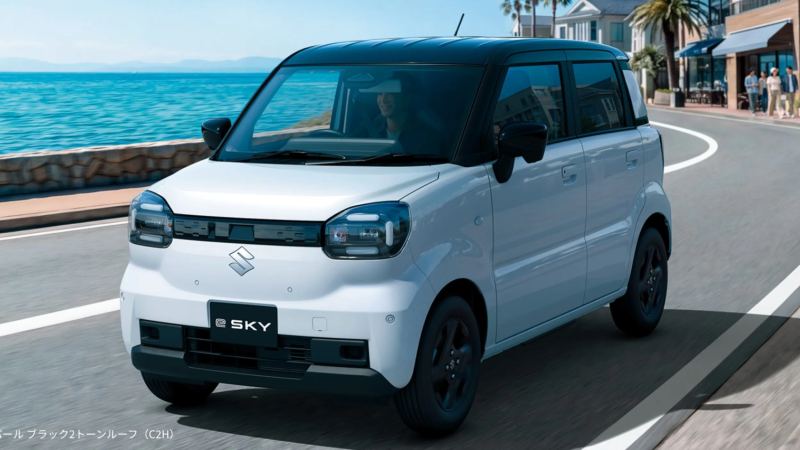
The Suzuki eSky is a compact four-seat kei EV with a 26 kWh LFP battery, 193 miles (310 km) of WLTC range and 50 kW DC charging. Japanese subsidies can reduce its starting price to ¥1,552,000 ($9,800). The model reaches dealers on November 16 and is scheduled to expand into Europe and the UK from 2027.


The Toyota RAV4 remains a popular compact SUV, but its value and capabilities face strong competition from five hybrid alternatives.

Volkswagen has owned Bentley since 1998, but the luxury marque remains closely tied to its historic Crewe factory, where its current models are assembled in England despite their extensive German engineering and component links.

Tesla’s latest Roadster remains unconfirmed for production, but its dramatic debut included airborne stunts that few cars could match.

A fire at Frank Kent Cadillac in Fort Worth, Texas, destroyed six electric SUVs believed to be Cadillac Escalade IQs and took nearly 18 hours to bring under control.

A Ferrari F50 with just 106 miles on its odometer is expected to surpass $20 million at auction on October 31, potentially setting a new record for the model and highlighting its rapid rise in collector value.