
Diesel costs are putting pressure on truckers, farmers, and anyone who relies on goods transported by them—which is essentially everyone in the country. President Donald Trump says he supports keeping more American diesel at home, and a report Wednesday said a 90-day export ban was being prepared. Diesel futures dropped sharply after the report, but the White House later said it was inaccurate, leaving drivers uncertain about the administration’s next step.
Politico reported that the administration was preparing a 90-day diesel-export ban, citing five people familiar with the discussions. Reuters said it was unable to independently confirm the report. A White House official later said the administration was not considering a blanket temporary ban.
That distinction is important to motorists looking for relief at the pump. AAA reported that diesel averaged $6.52 per gallon nationally on September 23, compared with $5.61 a month earlier and $3.69 a year earlier. The expense affects diesel-vehicle owners directly, but it also raises operating costs for the trucks, trains, and equipment that transport food, build homes, and support farming. Those systems influence costs throughout the country.
Trump publicly endorsed the concept Tuesday. “I’ve said let’s not send out the diesel,” he told reporters, saying he had discussed it with members of his administration. Treasury Secretary Scott Bessent said officials were assessing whether a complete or partial export restriction could work. Those comments lent credibility to the later report, even as the White House now rejects its main assertion.

Energy Secretary Chris Wright takes a different position on the proposed solution. He said Wednesday that a blanket export ban would be ineffective and could send gasoline and jet-fuel prices higher. Wright’s concern is that limiting diesel exports could lead refiners to process less crude oil. Because refineries produce multiple fuels from each barrel, lower production could also tighten supplies of other petroleum products.
Wright said the administration is instead considering voluntary cooperation with refiners to boost diesel supplies in the United States. He provided no specific details and said officials had not reached a decision. Markets moved before that clarification: Reuters reported that October ultra-low-sulfur diesel futures fell about 4 percent Wednesday after dropping more than 6 percent earlier. Futures do not directly set pump prices, so the decline does not guarantee immediate savings for truckers.
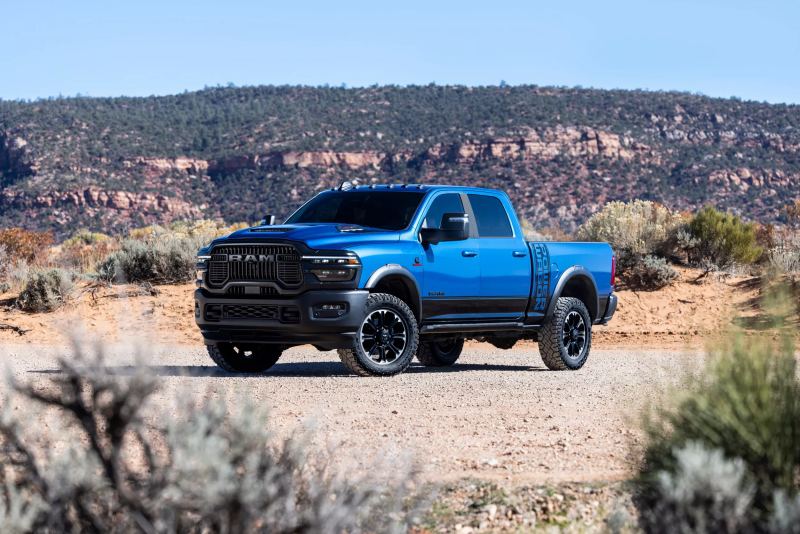
At this point, there is neither an announced export ban nor a finalized alternative. Trump supports the concept, Energy Secretary Wright warns it could make other fuels more expensive, and the White House denies that a 90-day restriction is in preparation. Diesel users—including big-rig operators, farmers running combines, and heavy-duty pickup owners—continue to pay more than $6.50 per gallon.
The administration has not announced a diesel export ban, despite President Trump’s support for keeping more fuel in the United States and reports of a possible 90-day restriction. Energy Secretary Chris Wright says a blanket ban could reduce refinery output and raise prices for gasoline and jet fuel. Officials are also considering voluntary cooperation with refiners as diesel costs remain above $6.50 per gallon.


The Toyota RAV4 remains a popular compact SUV, but its value and capabilities face strong competition from five hybrid alternatives.

Volkswagen has owned Bentley since 1998, but the luxury marque remains closely tied to its historic Crewe factory, where its current models are assembled in England despite their extensive German engineering and component links.

Tesla’s latest Roadster remains unconfirmed for production, but its dramatic debut included airborne stunts that few cars could match.

A fire at Frank Kent Cadillac in Fort Worth, Texas, destroyed six electric SUVs believed to be Cadillac Escalade IQs and took nearly 18 hours to bring under control.

A Ferrari F50 with just 106 miles on its odometer is expected to surpass $20 million at auction on October 31, potentially setting a new record for the model and highlighting its rapid rise in collector value.