
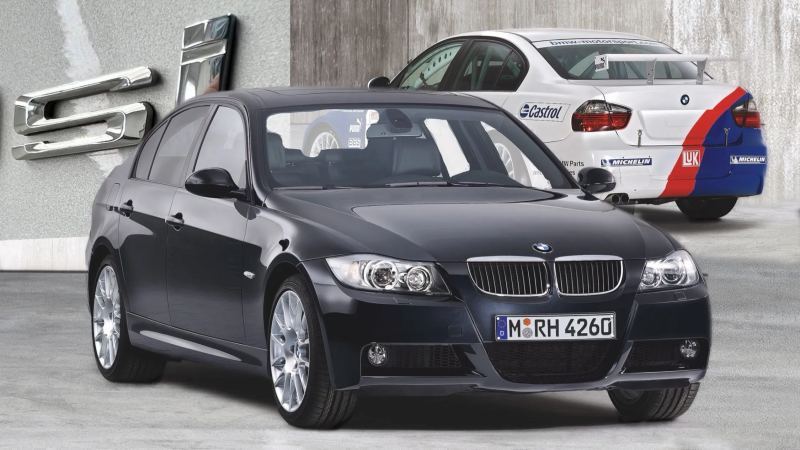
Motorsport success has helped create entire automotive brands, while also producing some spectacular road cars. Without homologation rules requiring automakers to build tens, hundreds, or thousands of road-legal examples of their competition machines, cars such as the Plymouth Superbird, Audi Quattro, Porsche 911 GT3, and BMW E30 M3 would never have reached public roads.
The combination of limited production and racing heritage has made most homologation specials too expensive for the average enthusiast. The BMW E90 320Si is a notable exception. It helped BMW claim multiple championships and may be closer in character to the original E30 M3 than any M3 that followed. It is also remarkably cheap to buy.
Outside the U.S., where the model was never sold, many enthusiasts have never heard of the 320Si. Even in Europe, it remains largely unknown, helping explain why one can cost about as much as a used hatchback. Low-mileage cars sell for under $10,000, while higher-mileage examples can be found below $6,000.
So what exactly is the 320Si? In 2005, BMW was targeting World Touring Car Championship success. The E90 M3 was still several years away and would not have qualified for WTCC’s Super 2000 rules, which limited engines to 2.0 liters. BMW instead needed a modern interpretation of the original E30 M3: a lightweight, high-revving four-cylinder able to challenge Seat and Alfa Romeo.
More Revs, Less Weight
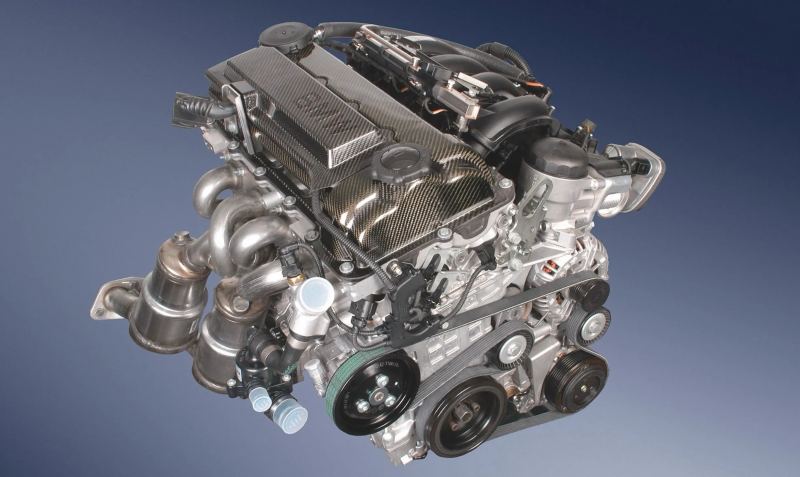
BMW started with the regular 320i’s 1,995 cc N46 four-cylinder, increasing the bore from 84 to 85 mm while shortening the stroke by 2 mm to 88 mm. The changes allowed the engine to rev more freely, while larger valves and a compression-ratio increase from 10.5 to 11.0:1 improved airflow and efficiency. The resulting 1,997 cc engine used a conventional throttle butterfly instead of BMW’s then-new Valvetronic system, and its rev limit rose by 800 rpm to 7,300 rpm.
BMW cast the cylinder head at its Landshut facility, the same factory that produced its Formula 1 engines. A carbon-fiber valve cover shaved 22 pounds (10 kg) and provided a visual suggestion of the performance beneath it.
Is That It?
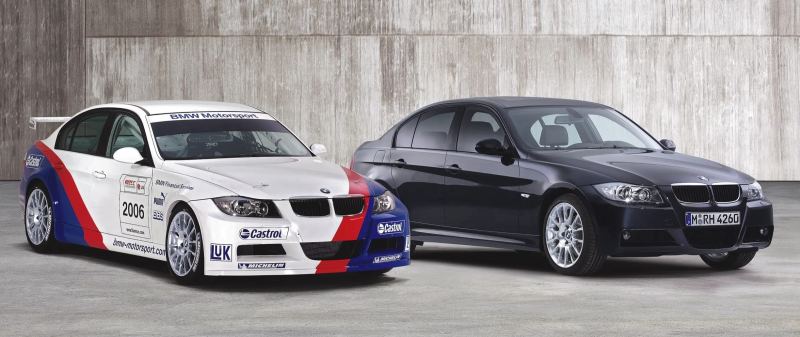
The problem was that the 320Si offered little rage, aside from the frustration it caused BMW fans. Output was only 171 hp (173 PS) and 143 lb-ft (194 Nm). That was a substantial gain over the standard 320i’s 141 hp (143 PS), but those figures were hardly exciting in 2005. Its 8.1-second 0-to-62-mph (100 km/h) time was similarly ordinary, and even that year’s 2.0-liter 320d diesel produced 161 hp (163 PS). The racing version, by contrast, developed 271 hp (275 PS).
The styling was equally restrained. Spotting the Si-specific touches required close attention: knowledgeable BMW fans might identify the motorsport-inspired 18-inch wheels, wider tires, larger brakes, and satin-chrome mirror caps. To most observers, it looked like an ordinary 3-Series.
Snappier Gears And Brakes
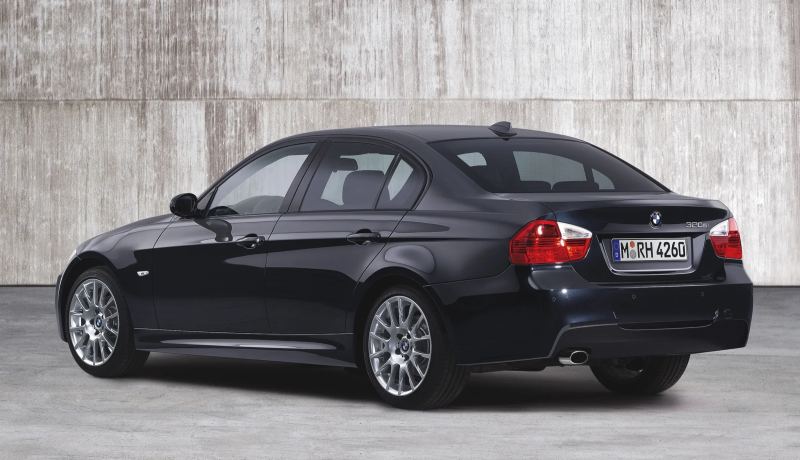
Several meaningful upgrades were hidden from view. The car retained the standard M Sport suspension, but BMW fitted a shorter 4.10:1 rear axle ratio, allowing it to reach its 140-mph (225-km/h) top speed in sixth gear. The front brakes were also enlarged.
FIA rules required BMW to produce 2,500 cars, but the company ultimately built 2,600. None were sent to the U.S., where the WTCC attracted less interest and the road car’s modest performance might have made it a target for ridicule. On the circuit, BMW and driver Andy Priaulx had far more to celebrate: the 320Si race car won both the drivers’ and manufacturers’ championships in 2006, its first competitive season, and repeated that result in 2007. Road-car owners have faced a different legacy, as the special aluminum cylinder liners can disintegrate. If an engine fails, the best solution in 2026 is to replace them with steel liners during the rebuild, although that repair is expensive even though the cars themselves are cheap.
$10k Buys A Good One
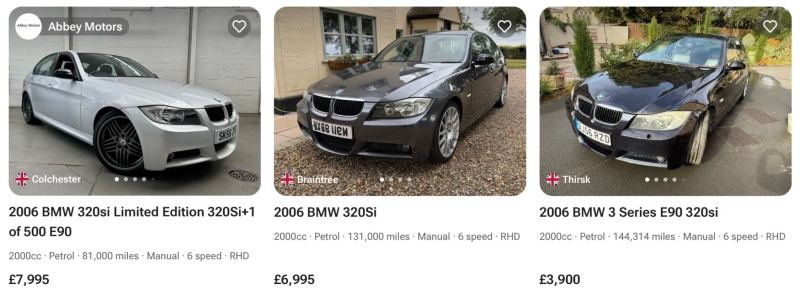
We found three of the 500 cars supplied to the UK listed on Car & Classic, with asking prices ranging from £3,900 to £7,995 ($5,200 to $10,600). That seems like exceptional value given the model’s rarity and racing pedigree, even if its road performance is fairly modest. E30 M3s now cost around $75,000, while a well-kept E90 M3 can command $35,000.
Prices could rise once enthusiasts remember the 320Si’s significance. The same thing happened with the E12 M535i, although only after I had sold two of them for very little. Hopefully, any increase will wait until after 2030, when the 320Si becomes eligible for import into the U.S. under the 25-year rule.
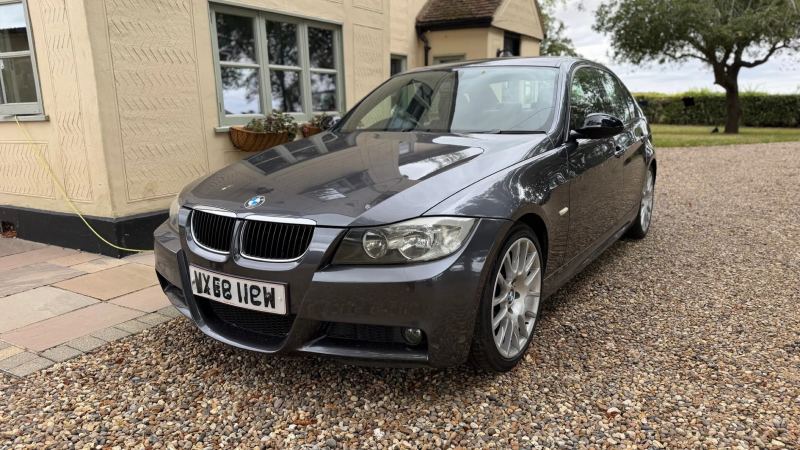
The BMW 320Si remains one of the most overlooked homologation specials, combining a bespoke high-revving engine, sharper gearing, larger brakes, and genuine World Touring Car Championship credentials. Although its road-car performance was modest and its engine has a known weakness, examples remain remarkably affordable, with UK cars available for under $10,000 and U.S. import eligibility arriving in 2030.


The Toyota RAV4 remains a popular compact SUV, but its value and capabilities face strong competition from five hybrid alternatives.

Volkswagen has owned Bentley since 1998, but the luxury marque remains closely tied to its historic Crewe factory, where its current models are assembled in England despite their extensive German engineering and component links.

Tesla’s latest Roadster remains unconfirmed for production, but its dramatic debut included airborne stunts that few cars could match.

A fire at Frank Kent Cadillac in Fort Worth, Texas, destroyed six electric SUVs believed to be Cadillac Escalade IQs and took nearly 18 hours to bring under control.

A Ferrari F50 with just 106 miles on its odometer is expected to surpass $20 million at auction on October 31, potentially setting a new record for the model and highlighting its rapid rise in collector value.